



The Last Plank: Artificial Intelligence and the Question of Being Human
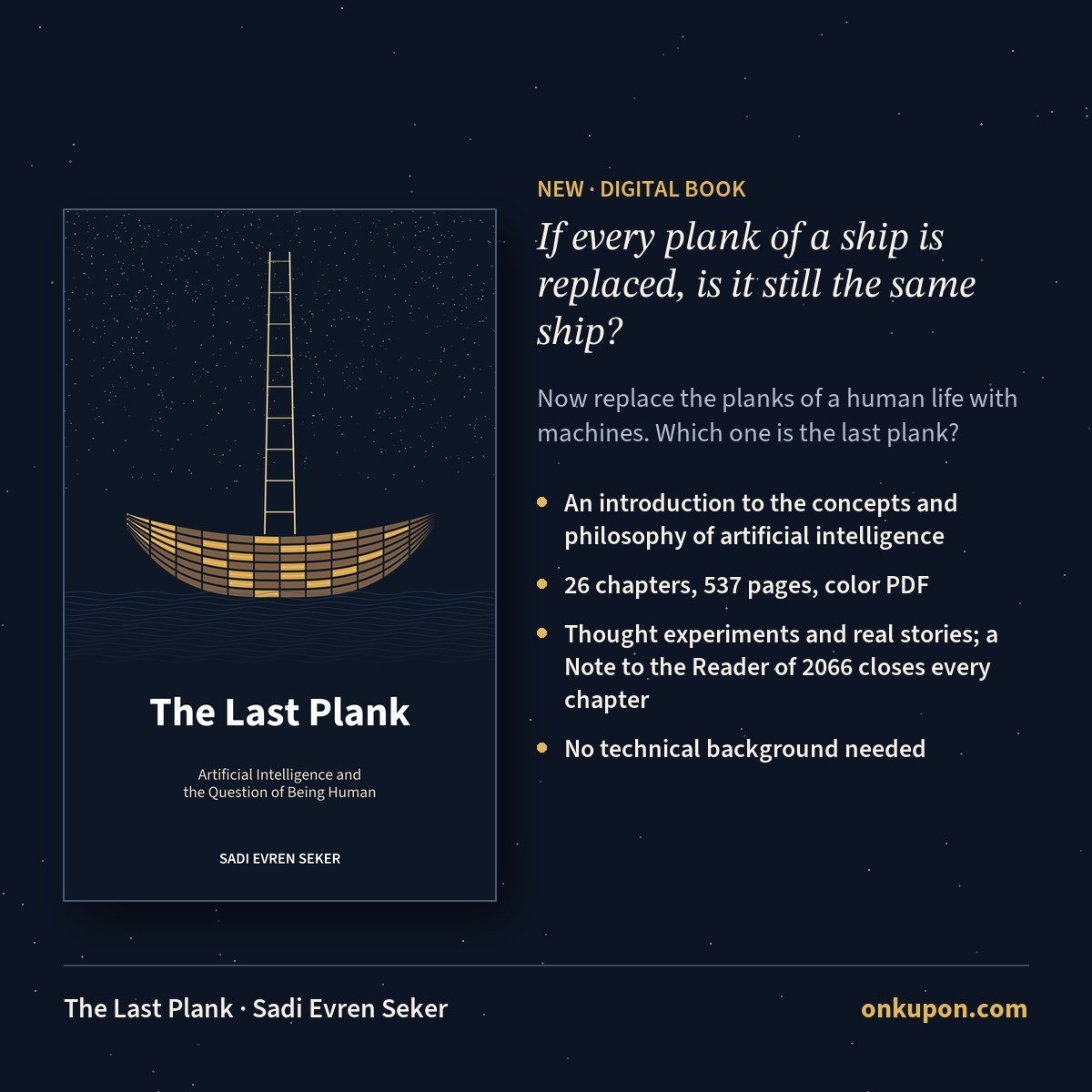
If every plank of a ship is replaced one by one, is it still the same ship? Now replace the planks of a human life: memory with search, judgment with prediction, work with automation, conversation with a machine that answers in fluent sentences. Which plank is the last one, the one that makes us who we are?
This book climbs a ladder in five parts, from Sign through Information, Knowledge and Wisdom to the Ideal: what technology is and how it extends the human hand; how numbers, chance and evidence became the raw material of machines; how machines learn and what “intelligence” means; whether a machine can create, be alive, or have a conscience; and what AI means for work, money, power, trust and the future of the human species.
Who it is for
- Curious readers with no technical background. Every term is explained in plain words when it first appears.
- Students and instructors in philosophy, ethics, technology and society courses.
- Technical readers who want to step back and ask what their work is for. Optional Under the Hood boxes go deeper.
What is inside
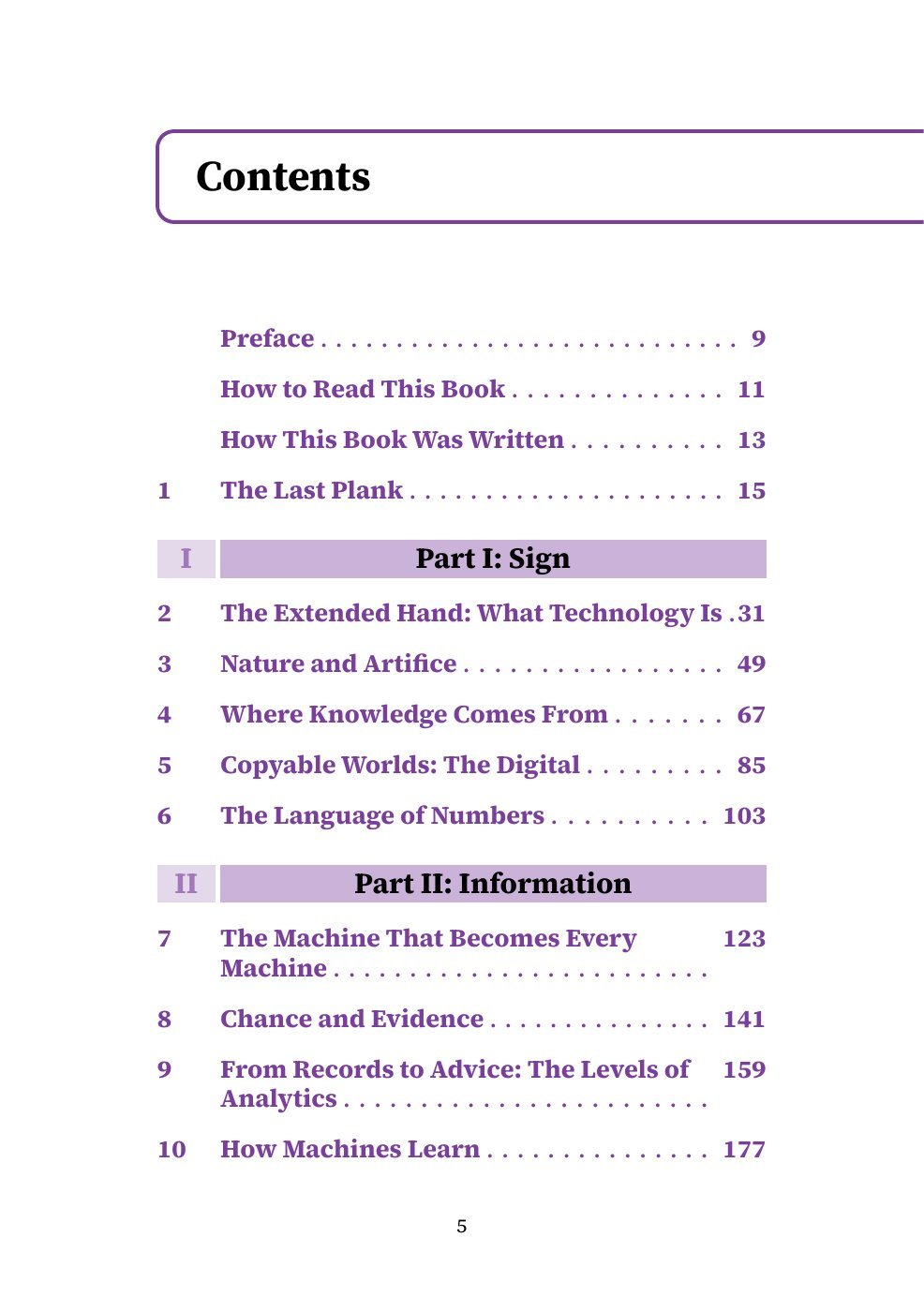
- Part I, Sign: what technology is, nature and artifice, where knowledge comes from, the copyable digital world and the language of numbers.
- Part II, Information: the machine that becomes every machine, chance and evidence, from records to advice, and how machines learn.
- Part III, Knowledge: the ladder of intelligence, two ways of thinking, narrow, general and super intelligence, and whether a machine can create or be alive.
- Part IV, Wisdom: whether AI is making us dumb, the conscience of machines, the end of work, money and the state, who gets the fire, deception and theft, and twelve dark futures.
- Part V, The Ideal: the singularity, the Ship of Theseus and transhumanism, an endless field, and an epilogue.
What makes it different
- 26 chapters that move from “The Extended Hand: What Technology Is” to “The Singularity”, “The Ship of Theseus: Transhumanism” and “Twelve Dark Futures”.
- Key Idea, Thought Experiment, Real Story and Myth vs. Reality boxes that test popular beliefs against evidence.
- A Note to the Reader of 2066 closes every chapter: a letter to someone reading forty years from now about what should still hold, and what was probably a product of our moment.
- Questions to Carry into your own life and work, annotated further reading, a glossary and a timeline of ideas.
- Every factual claim rests on a source listed at the end of its chapter. Claims about products, laws and research carry a date, because they will change. The questions will not.
Book details
- Author: Prof. Dr. Sadi Evren Seker
- Language: English. The Turkish edition, Son Tahta, is sold as a separate product.
- Edition: 2026. Dated facts are current as of late 2026.
- Length: 537 pages: 26 chapters in five parts, with a timeline of ideas and a glossary.
- Format: Color PDF. After your order is complete, download it from the Downloads section of your account.
- Level: No prerequisites.
Frequently asked questions
Who wrote The Last Plank?
Prof. Dr. Sadi Evren Seker. He has worked in information technology since 1997 and teaches artificial intelligence and computer science at the university level.
Is this a technical book?
No. It is a book of ideas. Every term is explained when it first appears, and the few technical details sit in optional Under the Hood boxes that you can skip.
Can it be used in a course?
Yes. It suits philosophy, ethics, and technology and society courses. Each chapter ends with questions to carry and annotated further reading.
How is the book delivered?
As a 537-page color PDF. The file appears in the Downloads section of your account once your order is complete.
Was AI used to write it?
Yes, and the book says so plainly. Its “How This Book Was Written” section explains how AI tools were used and how the content was checked against its sources.
Is there a Turkish edition?
Yes. Son Tahta is the Turkish edition, sold as a separate color PDF.
About the author
Sadi Evren Seker has worked in information technology since 1997 and teaches artificial intelligence and computer science at the university level. His master’s and doctoral theses were in artificial intelligence, on natural language processing. He has worked as an academic, expert and consultant in six countries, and for many years he has taught computer science to a wide audience.





Değerlendirmeler
Henüz değerlendirme yapılmadı.