
From Zero to Synthesis: How Generative AI Works, Where It Fails, and What It Means for You
We hear the words “artificial intelligence” every day. Yet few people can explain how a model turns text into numbers, how it pulls a picture out of pure noise, why it sometimes states something false with complete confidence, or what all of this means for our work and our minds. This book was written for everyone who wants real answers to those questions.
It is not a book of tricks for a particular app. Apps change every few months. The ideas underneath them change far more slowly, and once you understand them you can judge any new tool on your own.
Who it is for
- Anyone who uses AI and wants to understand how it works. No technical background is required.
- Instructors and students. The book is designed to serve as a course textbook.
- Technical readers. Mathematics and code wait in skippable boxes for those who want them.
What is inside
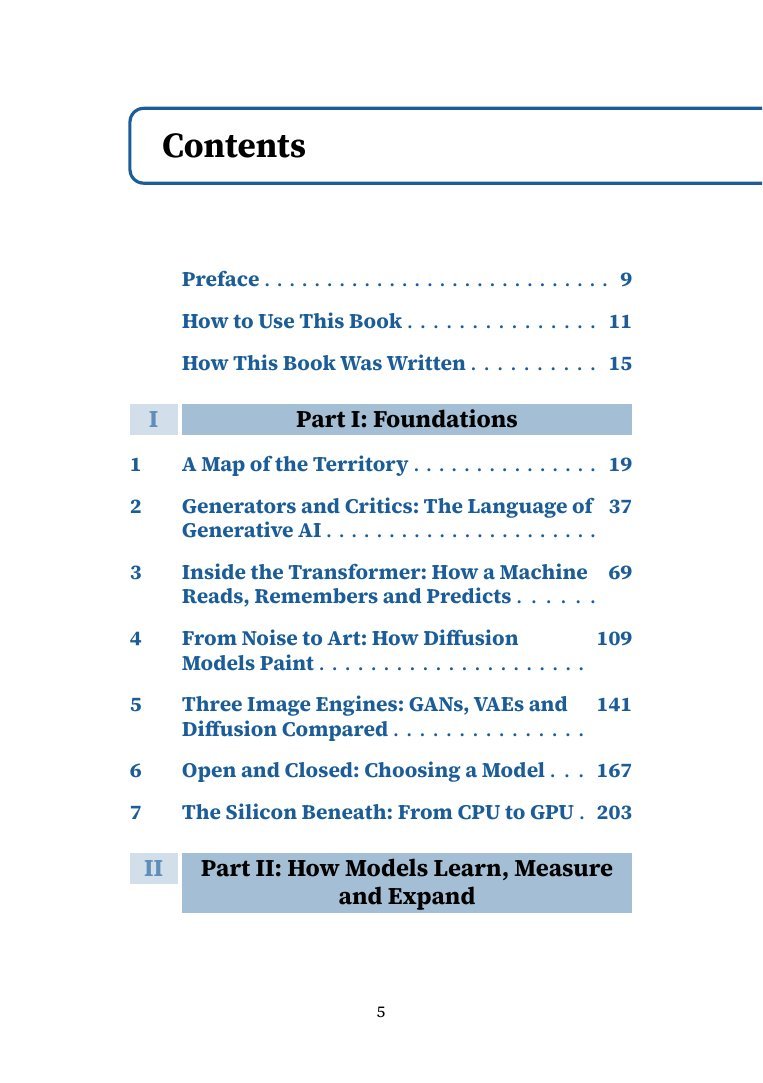
- Part I, Foundations: the language of generative AI, inside the transformer, diffusion models, GANs, VAEs and diffusion compared, open and closed models, and the hardware underneath.
- Part II, How Models Learn, Measure and Expand: pretraining, fine-tuning and RLHF; benchmarks and their limits; multimodal AI; large and small language models; explainability.
- Part III, The Ecosystem in the Real World: the economics of AI, agents, deployment and inference, data, and the limits of AI.
- Part IV, Society, Mind and the Future: deepfakes and the post-truth age, a career map, AI and human cognition, AGI and its risks, and where to build your expertise.
- Part V, The Field Manual: seven ways to stay in control of AI in daily work, with a ready-to-use master prompt template.
What makes it different
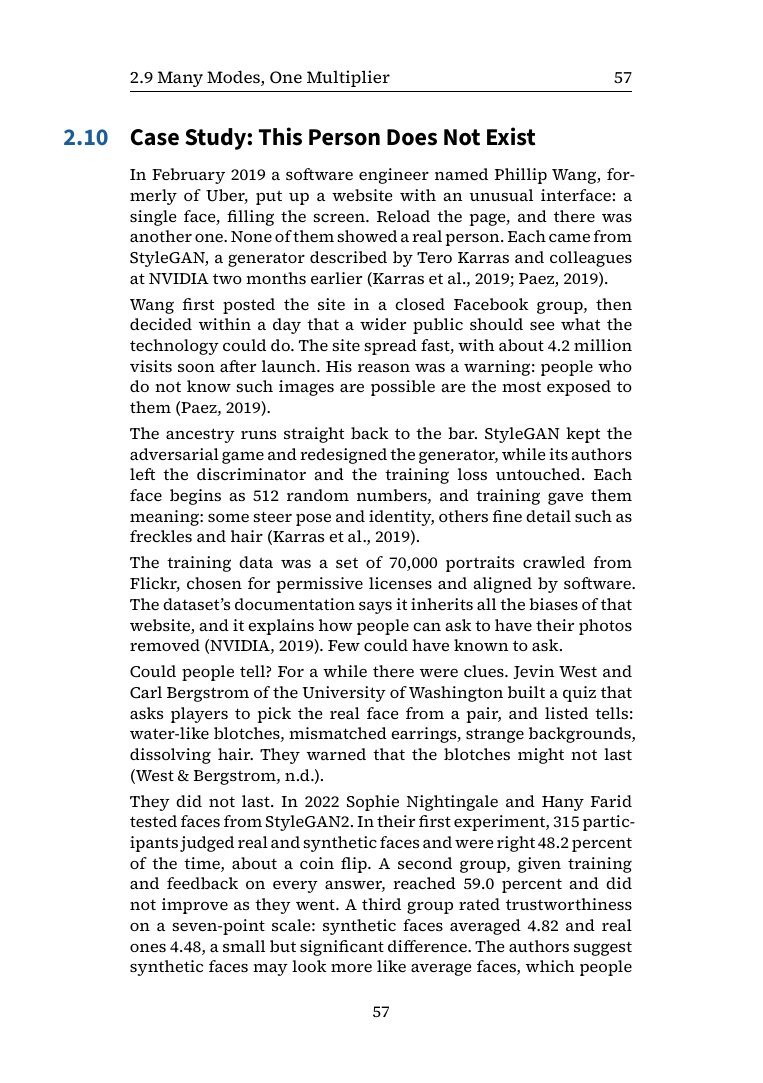
- Every chapter opens with a real, sourced story: the eight authors of the transformer paper, the AI-made portrait sold at Christie’s, the lawyers who cited court cases that did not exist, and the deepfake executives on a video call that led to a multimillion-dollar transfer.
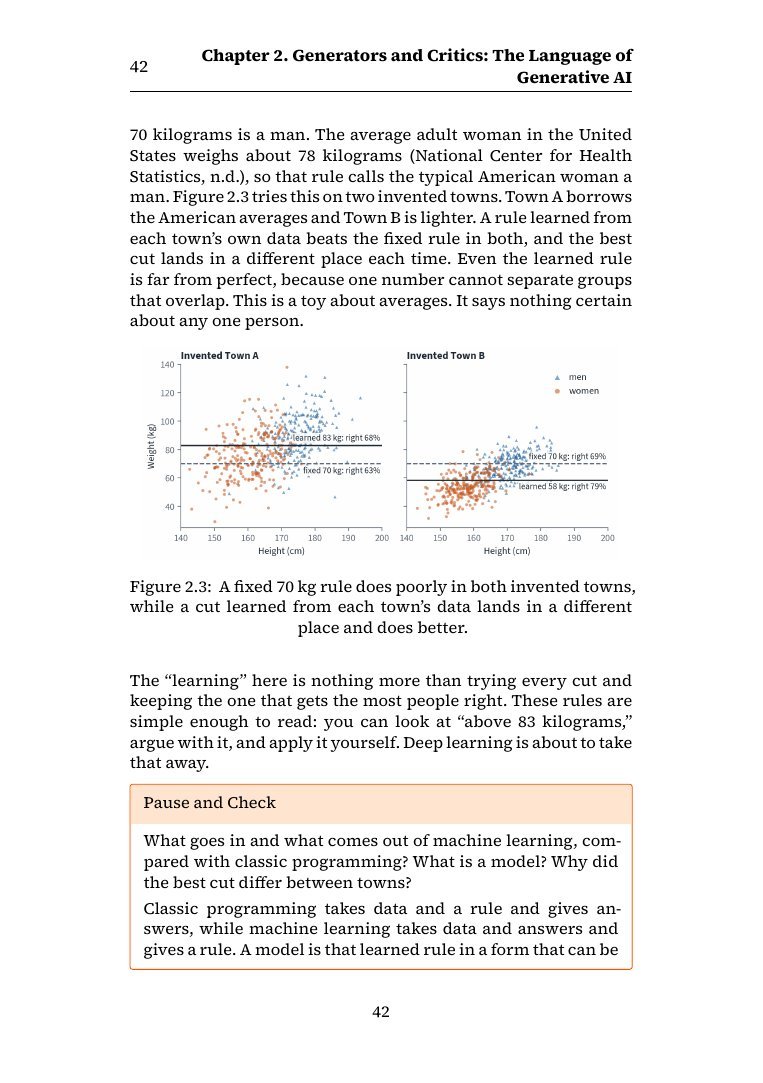
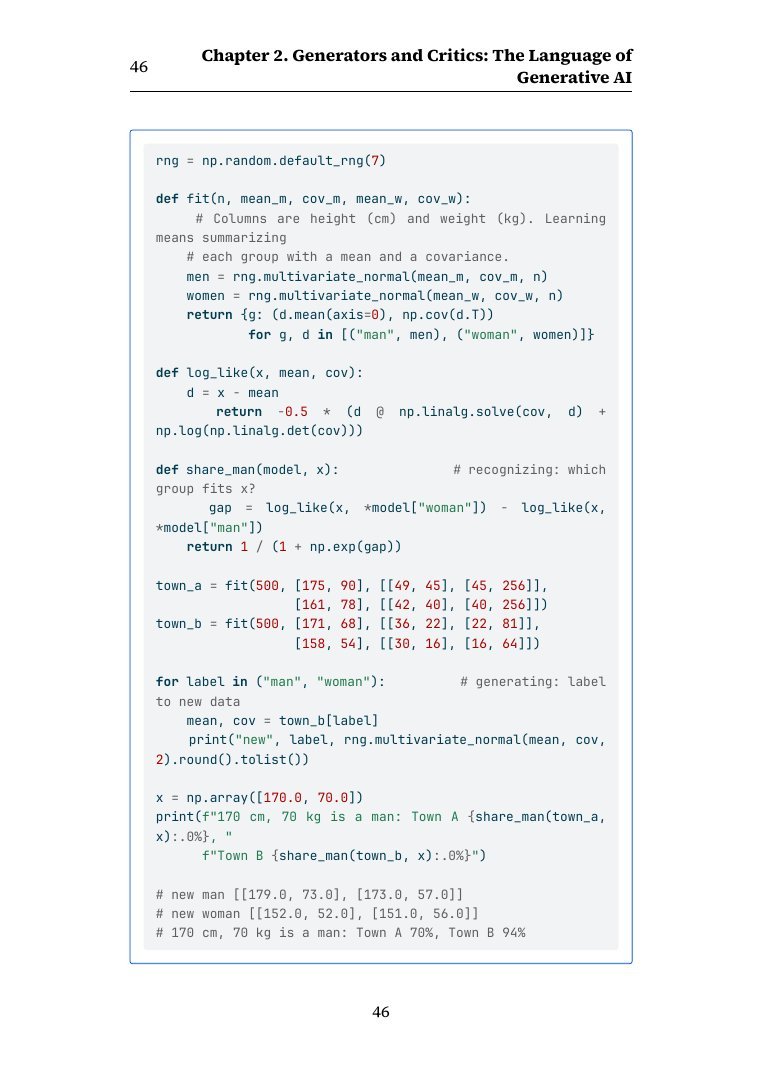
- The book has 21 case studies and 150 original figures, some of them showing real output from small models trained for this book.
- 41 Under the Hood boxes hold the mathematics and Python code, all of which has been run. You can skip any of them without losing the thread.
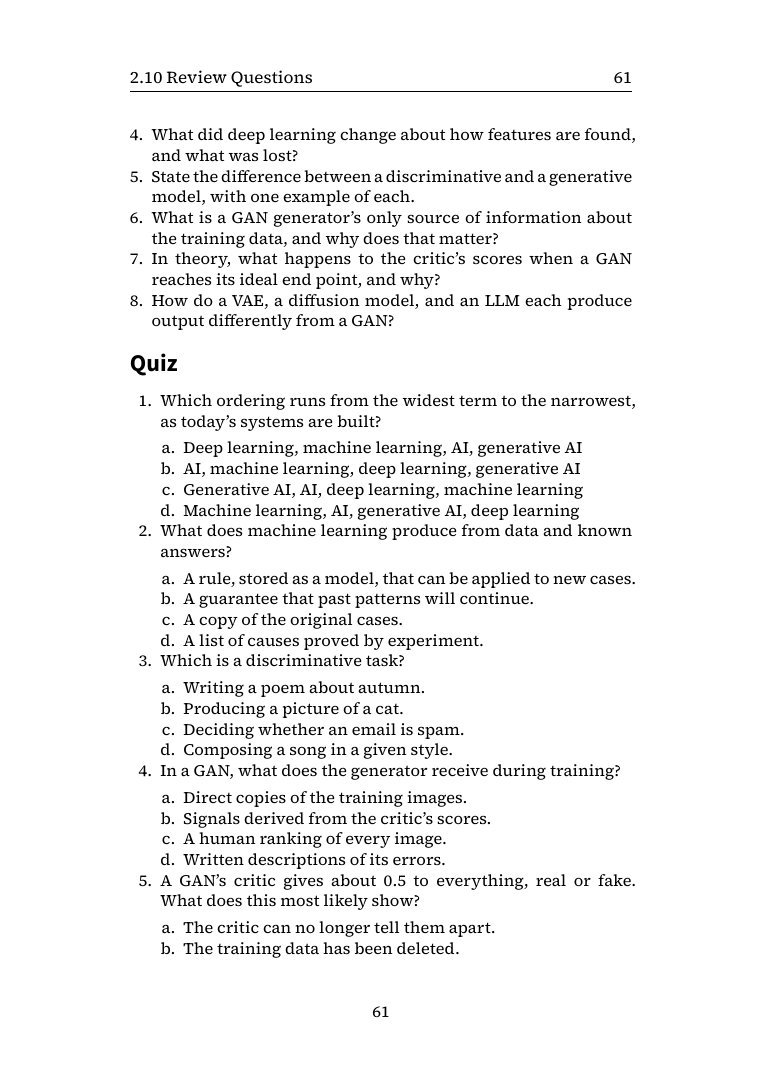
- Every chapter ends with a summary, key concepts, review questions, discussion questions and an activity. The 251 quiz questions have explained answers at the back of the book.
- There is a 275-term glossary and a timeline of 59 milestones in generative AI.
- Every factual claim rests on a source that was opened and read. Fast-changing facts (models, prices, laws) are dated “as of late 2026”.
For instructors
The book includes a suggested fifteen-week course plan with two sessions a week. Instructors who adopt it can request the Instructor’s Companion, with model answers to the review questions, guidance for the discussion questions and additional exam items for every chapter.
Book details
- Author: Sadi Evren Seker
- Language: English. A Turkish edition, Sıfırdan Senteze, is available separately.
- Edition: First edition, 2026. Facts are current as of late 2026.
- Length: 821 pages: 23 chapters in five parts, plus three appendices (quiz answers, glossary, timeline).
- Format: Color PDF, downloaded from your account once your order is complete.
- Level: No prerequisites. Optional mathematics and Python appear in Under the Hood boxes.
Frequently asked questions
Who wrote From Zero to Synthesis?
Sadi Evren Seker, who has worked in information technology since 1997 and teaches artificial intelligence and computer science at the university level. The book grew out of his lecture series on generative AI.
Do I need a technical background to read it?
No. The main text assumes no mathematics or programming. The mathematics and Python code sit in optional Under the Hood boxes that you can skip without losing the thread.
What does the book cover?
How generative AI works (transformers, diffusion models, GANs and VAEs, pretraining, fine-tuning and RLHF), how it is measured and deployed (benchmarks, agents, inference, data), where it fails (hallucination and the limits of AI), and what it means for society and careers (deepfakes, jobs, human cognition and the debate over AGI).
In what format is it delivered?
As a color PDF of 821 pages. The file is available in the Downloads section of your account once your order is complete.
Can I use it as a course textbook?
Yes. Every chapter has learning objectives, key concepts, review and discussion questions, a quiz and an activity, and the book suggests a fifteen-week course plan. Instructors can request the Instructor’s Companion.
How up to date is it?
The facts were checked in late 2026. Wherever a model, a price, a ranking or a law appears, the text says when it was true, so the explanations stay useful as the details change.
Was AI used to write the book?
Yes, and the book says exactly how. Its “How This Book Was Written” section describes how AI tools were used and how every claim was checked against sources.
Is there a Turkish edition?
Yes. The full Turkish translation, Sıfırdan Senteze: Üretken Yapay Zekâ, has 855 pages and is sold as a separate product.
Certificate
Readers who want to document what they have learned can take the online certificate exam: Generative AI certificate exam.
About the author
Sadi Evren Seker has worked in information technology since 1997 and teaches artificial intelligence and computer science at the university level. His master’s and doctoral theses were in artificial intelligence, on natural language processing. He has worked as an academic, expert and consultant in six countries.
How AI tools were used in making this book, and how the content was checked, is set out in its “How This Book Was Written” section.







Değerlendirmeler
Henüz değerlendirme yapılmadı.